China Mobile Hong Kong Lights Up the City's First Upper 6GHz Network in Mong Kok
China Mobile Hong Kong says it has completed testing of Hong Kong's first U6G network at its Mong Kok store, using 100MHz of upper 6GHz spectrum bought in 2024. It claims 3Gbps with carrier aggregation. Here is what is known and what is not.
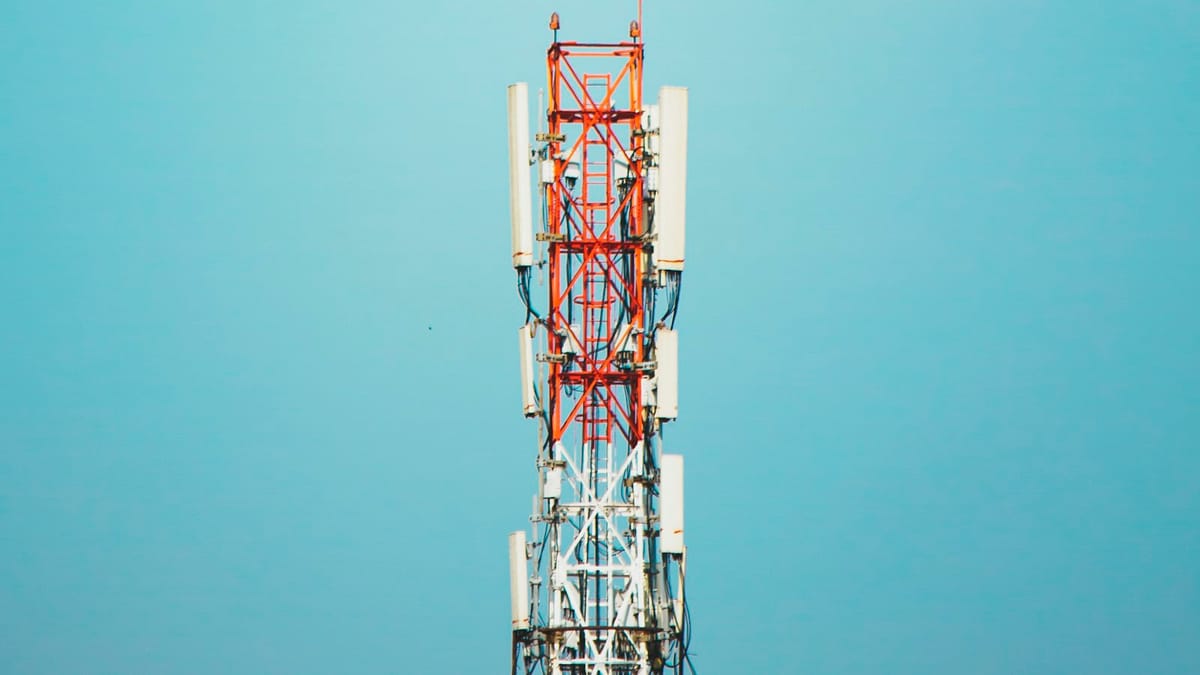
Hong Kong was the first place in the world to auction the upper 6GHz band for public mobile service. Now one of the winners says it has the band on air. China Mobile Hong Kong (CMHK) announced on October 17 that it has "taken the lead in realising a U6GHz network," completing network testing and validation at its Mong Kok flagship store, according to its press release.
U6G, or upper 6GHz, is the 6/7GHz range that the mobile industry sees as the main new mid-band capacity for 5G-Advanced and, later, 6G. CMHK says Hong Kong completed its 6/7GHz spectrum auction on November 29, 2024, and that it won 100MHz of continuous spectrum.
What CMHK is claiming
The headline figure is speed. CMHK says the new spectrum "can be utilised synergistically with existing frequency bands" and that, through combinations with its current spectrum, "it can achieve download speeds of 3Gbps." That is a company figure for aggregated bands, not a measurement of U6G alone, and the release does not describe the test conditions, uplink speeds, devices or number of sites.
The rest of the release is about direction rather than numbers: better service in congested areas, high-definition video, and future uses with smart glasses, AI robots and what it calls the convergence of communication, computing and AI. CMHK says it will expand hotspot coverage "according to demand" and work with partners on U6G products and testing, without giving a timeline.
The earlier field trial gives a better technical picture
For engineers, the more useful document is CMHK's field trial report filed with Hong Kong's regulator, OFCA, under a temporary permit. CMHK ran a single U6G sector from a mast about 23 meters up at the Tin Shui Wai Sport Centre from September 9 to 20, 2024. With 100MHz of bandwidth, it reported average outdoor downlink throughput of 842 Mbps within a cell radius of about 500 meters, and an average of 556 Mbps in an indoor test area.
The report also explains how it got there. Higher frequencies lose more signal through walls, and CMHK credited Extremely Large Antenna Array (ELAA) technology with making up much of that loss, so an outdoor sector could still provide partial indoor coverage. Those numbers are from a 2024 trial on one site, not from the new Mong Kok network, but they are the best public data on how the band behaves in Hong Kong's dense streets.
Why it matters in Asia
Upper 6GHz is contested spectrum. Mobile operators want it for capacity, while Wi-Fi 6E and Wi-Fi 7 also use parts of the 6GHz range in many countries, and regulators across Asia are still deciding how to split it. Hong Kong's early auction makes it an early test bed for operators and regulators elsewhere in the region.
For now, this is a validation milestone at one flagship store, not a commercial 6G launch. The next things to look for are compatible consumer handsets, wider coverage, and independent measurements of what the band delivers outside a controlled setting.